
Why we ran this test
The plastic board has a lot going for it. It costs around $18, it barely weighs anything so it is easy to grab and stash in a drawer, and it goes straight in the dishwasher. Most kitchens already own one or two. For quick jobs and knocking about, I get the appeal.
Then a reader pointed me toward the Apex Titanium Cutting Board. It runs $250 in a summer sale, down from $350, and it is the first cutting board made from Grade 1 Japanese titanium. It is uncoated and certified food-safe, and the surface is non-porous, so bacteria, stains, and odors have nowhere to soak in. It never warps or cracks, it keeps knife edges sharp, and there are no microplastics, BPA, or PFAS coming off it into your food. I wanted to know whether that earns the higher price, or whether the cheap plastic board most people already own does enough.
So I cooked on both for 30 days. Same knives, same meals, same trips through the dishwasher. I watched how each surface held up, how it smelled after raw chicken and garlic, and which board I actually reached for by the end. Here is what I learned.
At a glance: Apex Titanium vs. Plastic Cutting Board
The two boards side by side before I get into the day-to-day details.
| Spec | Apex Titanium | Plastic Cutting Board |
|---|---|---|
| Price | $250 once (was $350) | ~$18, but you rebuy |
| Material | Grade 1 titanium, food-safe | HDPE plastic |
| Hygiene | Non-porous, germ-resistant | Grooves trap bacteria |
| Microplastics / chemicals | None, no BPA or PFAS | Sheds microplastics, BPA/PFAS |
| Knife-friendliness | Keeps knife edges sharp | Grooves fast with use |
| Durability | Lasts a lifetime | Warps, needs replacing |
| Cleanup | Rinses clean, dishwasher-safe | Stains and holds odor |
| Best For | One board for life | A cheap backup |
| Guarantee | 100-day money-back | None, you just rebuy |
Green marks the better pick in each row.
Hygiene and food safety
This section mattered to me more than any other. A cutting board sits under almost everything you eat, so what happens on its surface ends up in your food. I cared about how well each one shrugged off bacteria after raw meat, whether stains and smells stuck around, and how the surface looked after a month of real knife work.
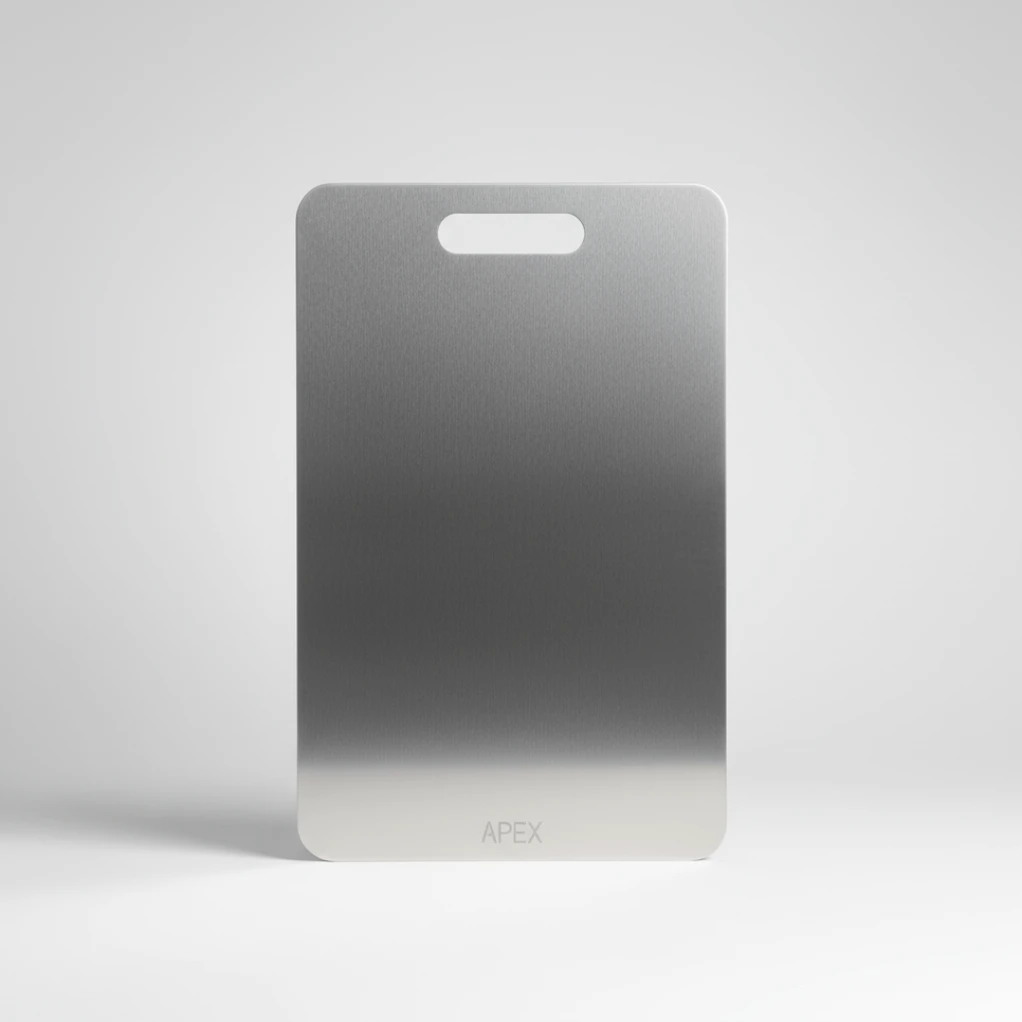
- Non-porous titanium, nothing soaks in
- Wipes clean after raw chicken
- Uncoated and certified food-safe
- No stains, no lingering smells
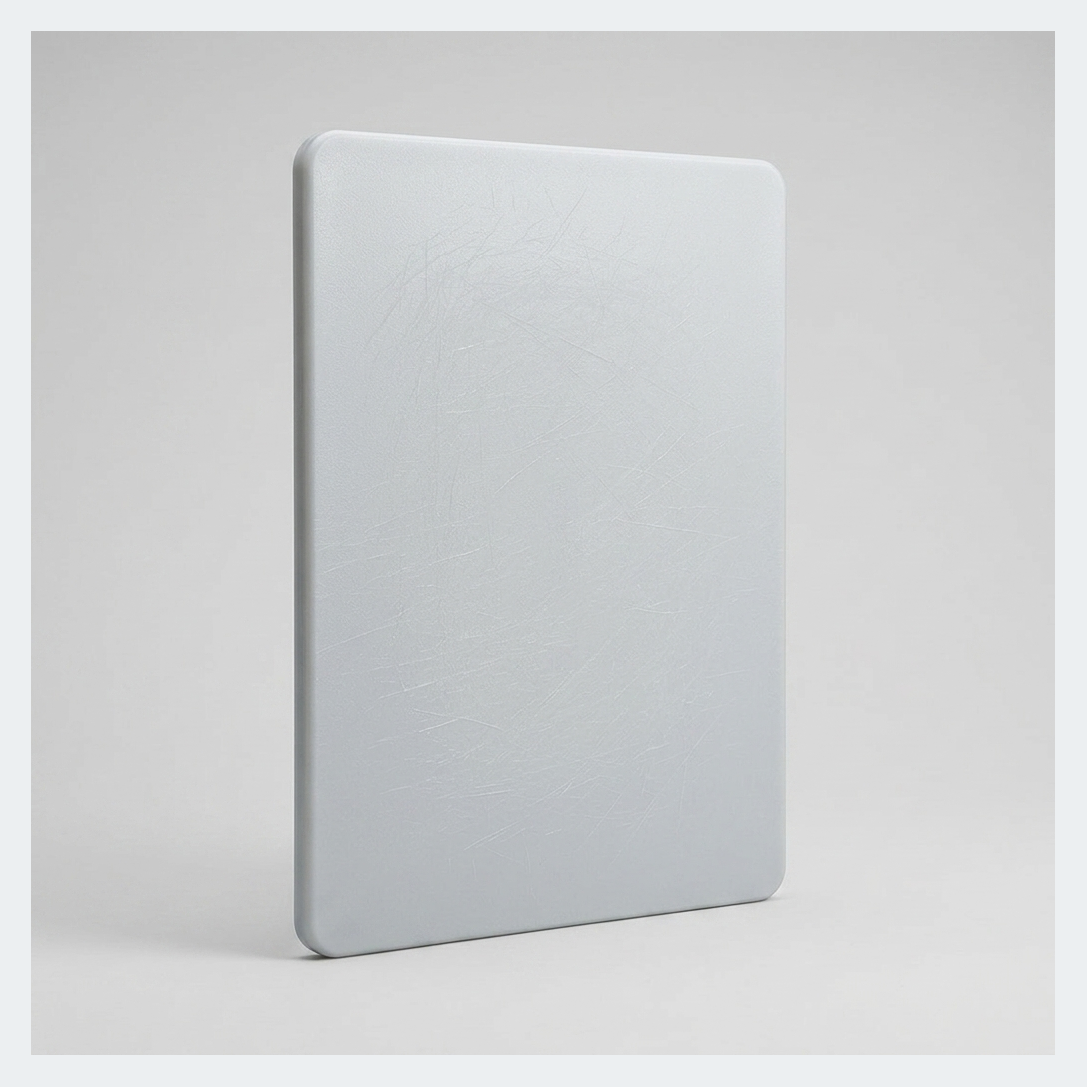
- Fine when new and smooth
- Hygienic on day one
- Knife grooves trap juice and moisture
- Scored grooves hold raw-meat bacteria
A brand-new plastic board is clean, no argument there. The problem is what happens after a month of real use. Once it grooves up, those cuts hold bacteria and moisture no matter how hard you scrub. The Apex board never scores like that. Its titanium surface is non-porous, so nothing soaks in and a plain rinse actually leaves it clean. If you only ever slice bread, a cheap plastic board is fine. If you cut raw meat and fish on it, the non-porous titanium is hard to argue with.
Everyday use and feel
A board you dread hauling out is a board that stays in the cupboard. Over the 30 days I paid attention to how each one felt in daily use: how it sat on the counter, how heavy it was to lift and wash, and whether it slid around while I worked. A board only helps if you actually reach for it.
- Free non-slip mat keeps it planted
- Real heft, steady under the knife
- Three sizes: S, M, and L
- Rinses clean, dishwasher-safe, no oiling
- It is feather-light and easy to grab one-handed, which is genuinely nice when you are only slicing a lemon
- It comes in every size and color for a few dollars, and a thin one tucks into a cupboard slot without a thought
- Can warp and rock after heat
- Feather-light, easy to rinse
Honestly, everyday feel came out close to a tie. The Apex board sat rock-steady on its non-slip mat and never slid while I chopped, and the plastic board was so light I could flip it one-handed. The plastic wins on sheer lightness since it is the easier one to lift and stash, while the Apex wins on grip, staying planted on the counter through hard cuts. If you want the featherweight option, the plastic edges it. If you want a board that does not budge, the Apex is the one I reached for. Both feel fine in daily use, so I would not decide on handling alone.
Durability and lifespan
This is the part you live with for years. A cutting board earns its keep by surviving thousands of cuts, hot pans set down next to it, and a daily trip through the sink. That is where these two split apart, because one of them you buy once and one you keep buying again.
- Never warps, cracks, or wears out
- Stayed flat after 30 days
- Knife marks do not gouge it
- Shrugs off hot pans and cold water
- Cheap and light, usually ten to twenty-five dollars, which is the honest reason most kitchens own one
- Easy to slide into a drawer or lean against the wall, and it goes in the dishwasher without fuss
- Scores fast, grooves deepen
- Warps and cups with heat
On lifespan this is not close. The Apex board came out of 30 days of daily use looking the way it went in, flat and clean, while the plastic board I ran alongside it already showed a web of knife scars. Titanium never warps or cracks, so you are not replacing it in a year or two. The plastic board has a real point in its favor on day one, since it is light and costs a fraction of the titanium up front. But that low price is a recurring one, because a scored, warped board gets binned and bought again. If you want something you buy once and hand down, the Apex wins the long game. If you only care about the cheapest thing on the shelf today, the plastic board makes its case.
Guarantee and returns
A return window tells you how much a company believes in what it sells. One board here is backed for life and asks you to try it risk-free. The other has no real guarantee because you are expected to toss it and buy another once it grooves up.
- 100-day money-back guarantee
- Buy once, yours for life
- Free shipping and returns
- Sold only on the official Apex site
- Whatever return policy the shop offers, which is usually fine for a cheap board
- No real long-term guarantee
- Cheap, low risk to try
- No hidden fees, but you do keep buying a new one every time it grooves up
This is where the two boards stop looking similar. The Apex gives you 100 days to cook on it and send it back if you are not sold, plus free shipping both ways, so trying it is genuinely risk-free. And because titanium never warps or wears out, buying it once is the whole story. The plastic board is a different animal. There is no meaningful guarantee on a $18 board, and you are not meant to keep it anyway. Once the surface scores up you replace it, and then you replace that one too. I would rather buy the board once and be done than start that cycle.
What it actually costs to own over time
A plastic board is about $18, so on the shelf it looks like the easy pick, and honestly it is the cheaper board on day one. The Apex is $250 one time. The catch with plastic is that it does not last. As it grooves, warps, and stains you throw it out and buy another, and that keeps happening. The titanium board is bought once and never replaced. Add up enough plastic boards over the years and the cheap one stops being cheap.
On day one the plastic board is the cheaper buy at about $18 against the Apex's $250. I won't pretend otherwise. But a plastic board grooves, stains, and warps, and once it does you throw it out and buy another. Do that year after year and the running total keeps climbing while the titanium board just sits on your counter, still flat, still smooth. The Apex's $250 is the whole cost, paid once. So the choice is a low price you pay again and again versus a higher one you pay a single time.
Price and value
Most people skim this part, so here is the plain version. What you pay in the cart today, and what you actually get for the money once the board has been through a few weeks of real cooking.
- ✅ Grade 1 Japanese titanium, food-safe
- ✅ Non-porous, blocks bacteria and odors
- ✅ Keeps knife edges sharp
- ✅ Never warps or cracks, buy once
- ✅ No microplastics, BPA, or PFAS
- ✅ Rinses spotless, dishwasher-safe
- ✅ Cheapest way to start
- ✅ Usually $10 to $25 upfront
- ✅ Very light, easy to move
- ✅ Dishwasher-safe, quick to rinse
- ❌ Goes porous, grooves trap bacteria
- ❌ Sheds microplastics, may leach BPA/PFAS
- ❌ Warps, stains, holds odors
On sticker price the plastic board wins, around $18 against the Apex board's $250. That gap is real and I won't wave it away. But a plastic board grooves up and starts holding bacteria, so you replace it every year or two, and those small buys add up while the Apex stays a one-time $250. For that money the titanium board never warps, keeps a non-porous surface that rinses clean in seconds, is soft enough to spare your knife edges, and puts nothing plastic near your food. The plastic board is lighter, cheaper to start, and it goes in the dishwasher without a second thought. If you want a cheap board for now and don't mind swapping it out often, the plastic one is a fine pick. If you'd rather buy once and stop thinking about it, the Apex is the board I'd keep.

