
Why we ran this test
A wood cutting board has a lot going for it. It is cheap to pick up, it looks warm and classic on the counter, and it stays gentle on your knife edges. For anyone who wants a familiar board that feels good to prep on, I understand the pull.
Then I got my hands on the Apex Titanium Cutting Board. It is made from Grade 1 Japanese titanium, uncoated and certified food safe, with a non-porous surface that does not soak up a thing. Instead of stopping at looks, it blocks bacteria, shrugs off stains and odors, goes in the dishwasher, and is built to outlast every wood board in my kitchen. I wanted to know whether titanium actually earns a spot on the counter, or whether a good wood board already does enough for most cooks.
So I prepped on both for 30 days, side by side. Same meals, same knives, same messes. I compared how each one handled raw meat and strong smells, how they cleaned up, and which one I actually trusted by the end. Here is what I learned.
At a glance: Apex Titanium Cutting Board vs. Wood Cutting Board
The two boards side by side before I get into the day-to-day details.
| Spec | Apex Titanium Cutting Board | Wood Cutting Board |
|---|---|---|
| Price | 70% off, one-time | Cheap, replaced often |
| Lifespan | Lasts a lifetime | Warps in a year or two |
| Bacteria Resistance | Non-porous, blocks bacteria | Absorbs juices and germs |
| Cleanup | Dishwasher-safe | Hand-wash only |
| Odor & Stains | Resists both | Holds smells |
| Gentle on Knives | Kind to blades | Kind to blades |
| Non-Toxic | Chemical-free, no microplastics | Cracks harbor mold |
| Money-Back Guarantee | 100-day refund | Varies by seller |
| Maintenance | None, just rinse | Oiling and drying |
Green marks the better pick in each row.
Bacteria and food safety
This mattered to me more than anything else. A cutting board touches raw meat, fish, and produce every day, so the real question is whether germs stay on the surface where soap can reach them, or soak in where they cannot. I prepped raw chicken on both boards, then watched how each one cleaned up and held up over the month.
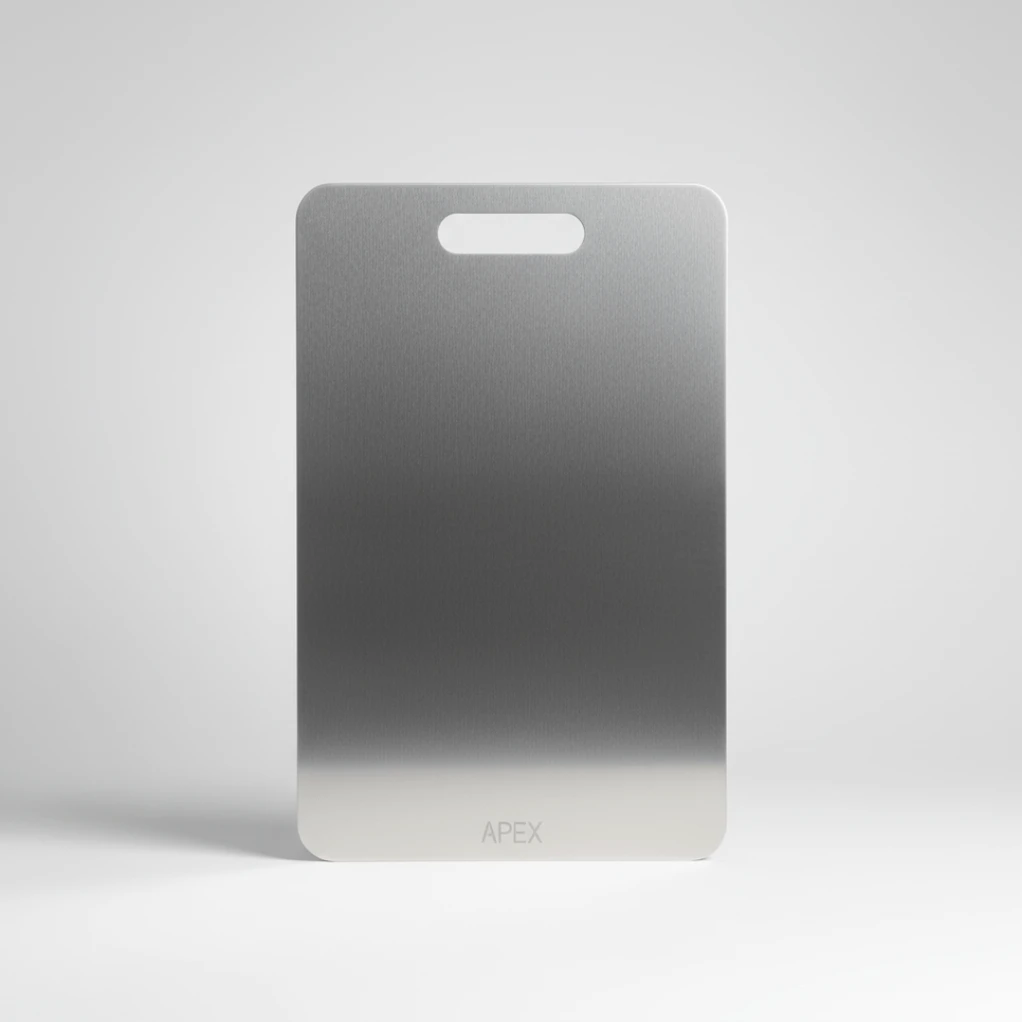
- Non-porous, so juices never soak in
- Grade 1 Japanese titanium, certified food safe
- Wipes clean after raw meat, dishwasher-spotless
- No pores or grooves for bacteria to hide in
- Odor and stain resistant
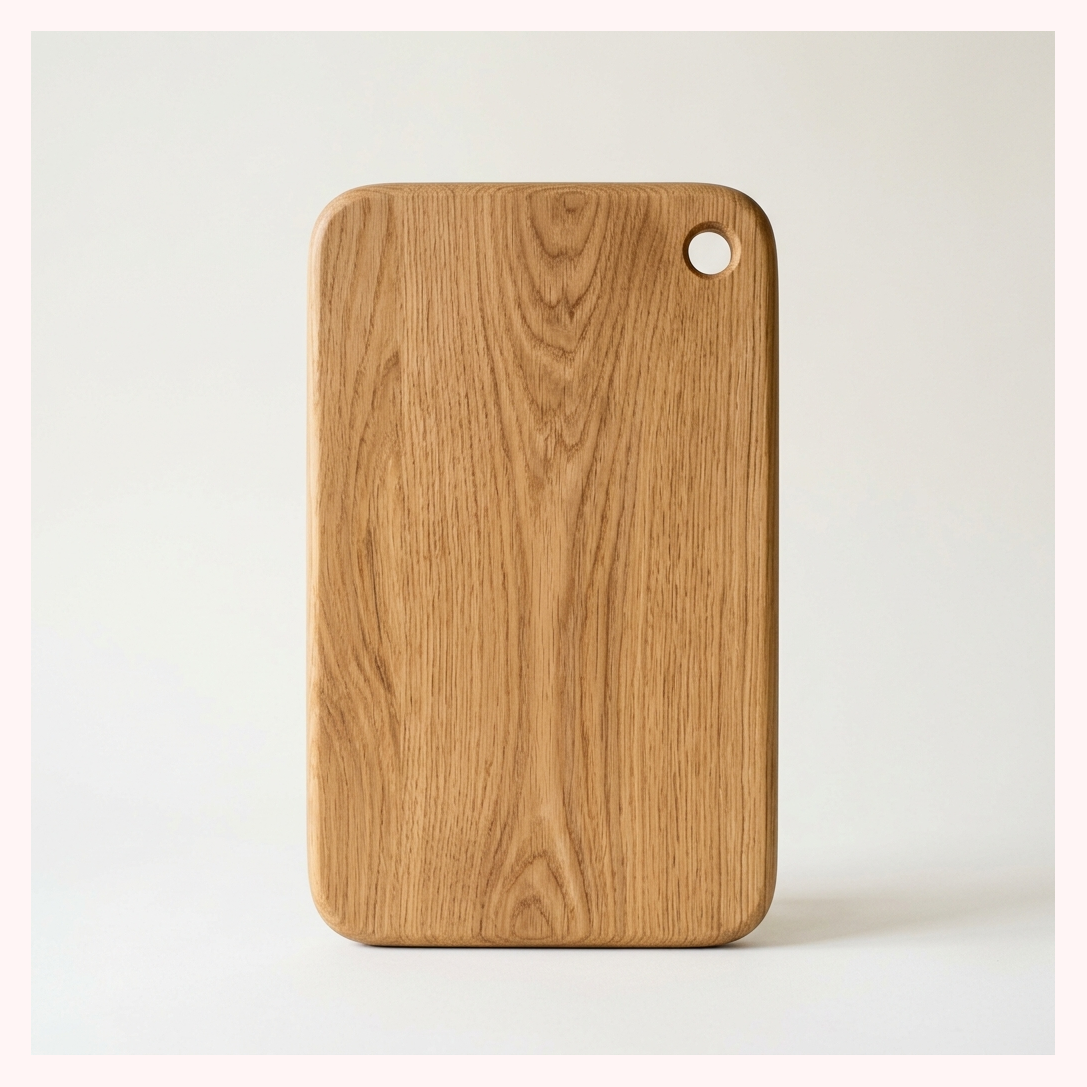
- Porous, so it drinks in raw juices
- Knife grooves trap bacteria
- Never fully rinses out of the grain
- Holds strong food smells
- Warps and cracks if left wet
Both boards can be safe if you are careful, but titanium makes careful the default. The wood board looks great and feels classic, and if you scrub and dry it well it does the job. The trouble is what you cannot see: juices that soak into the grain and bacteria that settle into knife grooves. Titanium gives all of that nowhere to hide, so it rinses truly clean every time. For raw meat and fish especially, a non-porous surface you can put in the dishwasher is the safer call, and it is why I kept reaching for the Apex board.
Durability and lifespan
This is the part you live with for years, not days. A cutting board takes a beating every single day, so the thing that actually matters is how long it lasts before it warps, cracks, or gets tossed. That is where these two split apart.
- Never warps, cracks, or splits
- Shrugs off heat, water, and heavy use
- Stays flat and smooth for years
- Dishwasher-safe, looks like day one
- No oiling or upkeep needed
- 100-day money-back guarantee
- Can last years with regular oiling
- Biodegradable when it wears out
- Warps and cracks if it gets wet
- Knife grooves never smooth out
- Usually replaced every year or two
- Dries out and cracks without oiling
On lifespan this is not close. A wood board is a consumable: use it hard and you are shopping for another one in a year or two, especially if you ever let it sit wet. Titanium is a buy-it-once board. Mine looked brand new after a month of daily abuse and dishwasher cycles, and there is simply nothing on it to wear out. Wood can last if you treat it gently and oil it faithfully. Titanium lasts because it is titanium. If you would rather buy one board and be done, this is the clearest win on the page.
Cleaning and upkeep
This is the difference between a board you use for a minute and one you fight with at the sink. I looked at how each one cleans up after raw meat, whether it holds smells and stains, and how much ongoing upkeep it takes to stay safe.
- Rinses spotless in seconds
- Fully dishwasher safe
- No oiling or seasoning, ever
- Odor and stain resistant
- Dries instantly, never warps
- Nothing soaks in, no residue
- Fine for quick, dry jobs
- Not dishwasher safe
- Must be dried flat right away
- Needs oiling every few weeks
- Holds odors and stains
- Grain never truly rinses clean
Cleanup is where wood quietly costs you time. It cannot go in the dishwasher, it has to be dried the moment you are done, and it needs oiling on a schedule to survive at all. Miss any of that and it warps, cracks, or starts to smell. Titanium skips the whole routine: rinse it, or drop it in the dishwasher, and it comes out clean and dry. For a surface that meets raw meat every day, being able to actually sanitize it is a big deal, and only one of these two lets you do that properly.
What it actually costs to own over time
A wood board is cheap on the shelf, so it looks like the easy pick. But it does not last. Warping, cracking, and staining mean you replace it every year or two, and those replacements add up. A titanium board is a one-time buy that never needs replacing. Stretch the timeline out and the cheap board quietly becomes the expensive one.
On day one the wood board is cheaper, and I won't pretend otherwise. But a wood board is not a one-time cost. It warps, cracks, stains, and starts to smell, so you end up buying another one, then another, every year or two. Add those replacements up and within a couple of years you have spent more than a single titanium board that never needs replacing. The titanium board's price is the whole price. You are really choosing between a low sticker you keep paying and a one-time buy that lasts for good.
Price and value
Most people skim this part. So here is the plain version: what you pay today, and what you actually get for the money once you have used the board for a while.
- ✅ Non-porous, blocks bacteria
- ✅ Grade 1 Japanese titanium, food safe
- ✅ Dishwasher-safe, no scrubbing
- ✅ Never warps or cracks, lasts a lifetime
- ✅ Odor and stain resistant
- ✅ Softer than steel, kind to knives
- ✅ No microplastics, BPA, or PFAS
- ✅ Three sizes, free shipping and returns
- ✅ Summer Sale, up to 70% off
- ✅ 100-day money-back, rated 4.89 by 27K+
- ✅ Cheapest to get started
- ✅ Warm, classic look
- ✅ Gentle on knife edges
- ✅ Biodegradable
- ❌ Soaks up juices, traps bacteria
- ❌ Warps and cracks in a year or two
- ❌ Hand-wash only, needs oiling
- ❌ Holds food odors
- ❌ Knife grooves build up
- ❌ Replaced again and again
On sticker price the wood board wins, and that gap is real. But a wood board keeps costing you: it warps, stains, and cracks, so you buy another every year or two, and the porous surface never truly rinses clean. For the money the titanium board is simpler, non-porous and bacteria-resistant, dishwasher safe, and built to last a lifetime with nothing to replace. Wood is cheaper to start and gentler on knives, and if you love the look and don't mind the upkeep it is a fine board. If you care about hygiene and want to buy once, the Apex board is the one I would keep on the counter.

